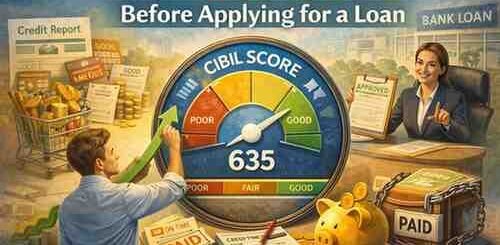
How Credit Utilization Impacts Loan Eligibility
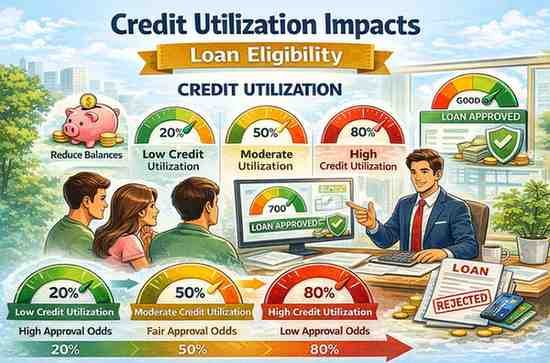
When lenders evaluate your loan application, one of the most important factors they check—after your credit score—is your credit utilization ratio. This single number can determine whether you get a loan, how much you qualify for, and the interest rate you receive. Many borrowers unknowingly misuse their credit cards and end up harming their loan eligibility.
Understanding how credit utilization works and managing it smartly can significantly improve your chances of getting approved for loans.
What Is Credit Utilization?
Credit utilization refers to how much of your total credit limit you are using.
Formula:
Credit Utilization Ratio = (Total Credit Used / Total Credit Limit) × 100
Example:
-
Credit Limit: ₹1,00,000
-
Credit Used: ₹60,000
Credit Utilization = 60%
Why Credit Utilization Matters to Lenders
Lenders see credit utilization as a measure of your spending behavior and credit discipline.
A high utilization ratio suggests:
-
You rely heavily on credit
-
You may be facing cash flow issues
-
You could be a high-risk borrower
A low utilization ratio suggests:
-
You are financially stable
-
You use credit responsibly
-
You pose lower risk to lenders
Ideal Credit Utilization Range
Most financial experts—and even lenders—recommend keeping credit utilization:
Below 30% = Excellent
30%–50% = Acceptable
Above 50% = High risk
Above 75% = Very high risk and likely to reduce your credit score
How Credit Utilization Affects Loan Eligibility
1. It Directly Impacts Your Credit Score
Credit utilization contributes 30%–35% of your credit score calculation.
High utilization leads to:
-
Immediate score drop
-
Slow recovery
-
Lower creditworthiness
Even if you pay on time, using 60–90% of your limit regularly can reduce your score and hurt eligibility.
2. High Utilization Signals Potential Financial Stress
Lenders interpret heavy credit usage as a sign that:
-
You may be struggling with expenses
-
You may soon miss payments
-
You depend too much on borrowed money
This reduces your chances of getting:
-
Personal loans
-
Car loans
-
Home loans
-
Business loans
3. Lower Utilization Helps You Qualify for Larger Loan Amounts
When your utilization is low:
-
Your credit score is higher
-
Your financial profile looks stable
-
Lenders trust that you can manage higher EMIs
This improves your loan eligibility significantly, especially for home and car loans where income-to-debt ratio matters.
4. Affects Interest Rates on Loans
Even if your loan is approved, high utilization affects the interest rate offered.
High utilization = High-risk borrower = Higher interest rate
Low utilization = Low-risk borrower = Lower interest rate
Keeping utilization under 30% can help you secure the best interest rates.
5. Influences Pre-Approved Loan Offers
Banks and credit card companies check your credit behavior regularly.
If your utilization is high:
-
Fewer pre-approved offers
-
Lower loan amounts
-
Higher interest rates
If your utilization is low:
-
Higher pre-approved limits
-
Faster approval
-
Attractive rates
How to Manage Credit Utilization Smartly
1. Keep Spending Below 30% of Your Limit
This is the fastest way to improve your credit profile.
Example:
If your card limit is ₹1,00,000 → Try to spend less than ₹30,000.
2. Increase Your Credit Limit (But Don’t Increase Spending)
A higher limit automatically reduces your utilization ratio.
Example:
Limit increased from ₹1,00,000 → ₹2,00,000
Usage ₹40,000 = Only 20% utilization
3. Pay Credit Card Bills Before the Statement Date
Most people pay on the due date — but lenders record utilization on the statement date.
Paying early lowers your reported credit usage.
4. Distribute Expenses Across Multiple Cards
Instead of using one card heavily, divide usage across 2–3 cards to keep each card’s utilization low.
5. Avoid Big Purchases Before Applying for a Loan
Large credit card expenses (even if you plan to repay soon) spike your utilization ratio and lower your score temporarily.
Always keep utilization low 2–3 months before applying for major loans.
6. Convert High Outstanding Amounts Into EMIs
If your card usage is too high, convert it into EMIs to reduce revolving balance and lower utilization.
Credit Utilization and Loan Types
Personal Loans
High utilization is considered risky; lenders may reject applications even with a good salary.
Home Loans
Banks check total utilization while calculating debt-to-income ratio. High usage may reduce eligible loan amount.
Business Loans
Strong credit discipline helps in getting lower interest rates and higher loan limits.
Car Loans
Lower utilization improves chances of getting quick approvals and competitive rates.
Conclusion
Credit utilization is one of the most powerful yet most ignored factors affecting your loan eligibility. By managing it wisely, you can:
-
Improve your credit score quickly
-
Increase your chances of approval
-
Qualify for higher loan amounts
-
Get lower interest rates
-
Build long-term financial stability
The key rule is simple:
Use credit smartly. Keep utilization low. Borrow responsibly.